AI SEO Trends 2026: How to Rank #1 in the Age of AI Search

SEO as we knew it is dead.
By April 2026, 73% of all searches are answered directly by AI without users ever clicking a website. Google's AI Overviews, ChatGPT Search, and Perplexity have fundamentally changed how people find information.
Yet some websites are seeing 300% traffic growth. What's their secret?
They've adapted to the new AI search landscape. While competitors chase outdated keyword strategies, these sites optimize for how AI actually understands and presents content.
In this guide, I'll show you the 7 AI SEO trends dominating 2026 and exactly how to implement them.
1. LLM Optimization: The New SEO

Large Language Models (LLMs) like GPT-5, Claude 4, and Gemini 2 are now primary information sources. When someone asks ChatGPT "What's the best CRM for small business?" they're not visiting your comparison article—they're reading AI's summary.
How to optimize for LLMs:
- Clear entity relationships: Use structured data to define who you are, what you do, and your authority markers
- Direct answers: Provide concise, factual responses to common questions in your niche
- Citation-worthy content: Create original research, statistics, and insights AI will reference
- Semantic markup: Implement Schema.org comprehensively across all content
Action Item: Audit your top 10 pages. Can an AI extract a clear, accurate answer from each in under 50 words? If not, rewrite for clarity.
2. Voice Search Optimization 2.0

Voice search isn't just "Hey Google" anymore. In 2026, conversational AI assistants handle complex, multi-turn queries:
"Find me a marketing automation tool under $100/month that integrates with Shopify, has good email deliverability, and is easy for beginners. Oh, and I need it to work in Europe for GDPR compliance."
That's one voice query containing 6 specific criteria.
Voice SEO tactics:
- Natural language content: Write how people speak, not how they type
- Long-tail conversational keywords: Target 8-15 word phrases
- FAQ schema: Structure content as question-answer pairs
- Local intent: 46% of voice searches have local intent—optimize accordingly
3. AI-Generated Content Detection (And How to Beat It)

Google's 2026 algorithms can detect AI-generated content with 94% accuracy. But here's the twist: they don't penalize AI content—they penalize low-quality content, regardless of source.
The winners in 2026 use AI as a starting point, then add:
- Original research and data
- Personal experiences and case studies
- Expert insights and quotes
- Unique visualizations and media
- Updated, time-sensitive information
4. Predictive SEO: Ranking Before You Publish
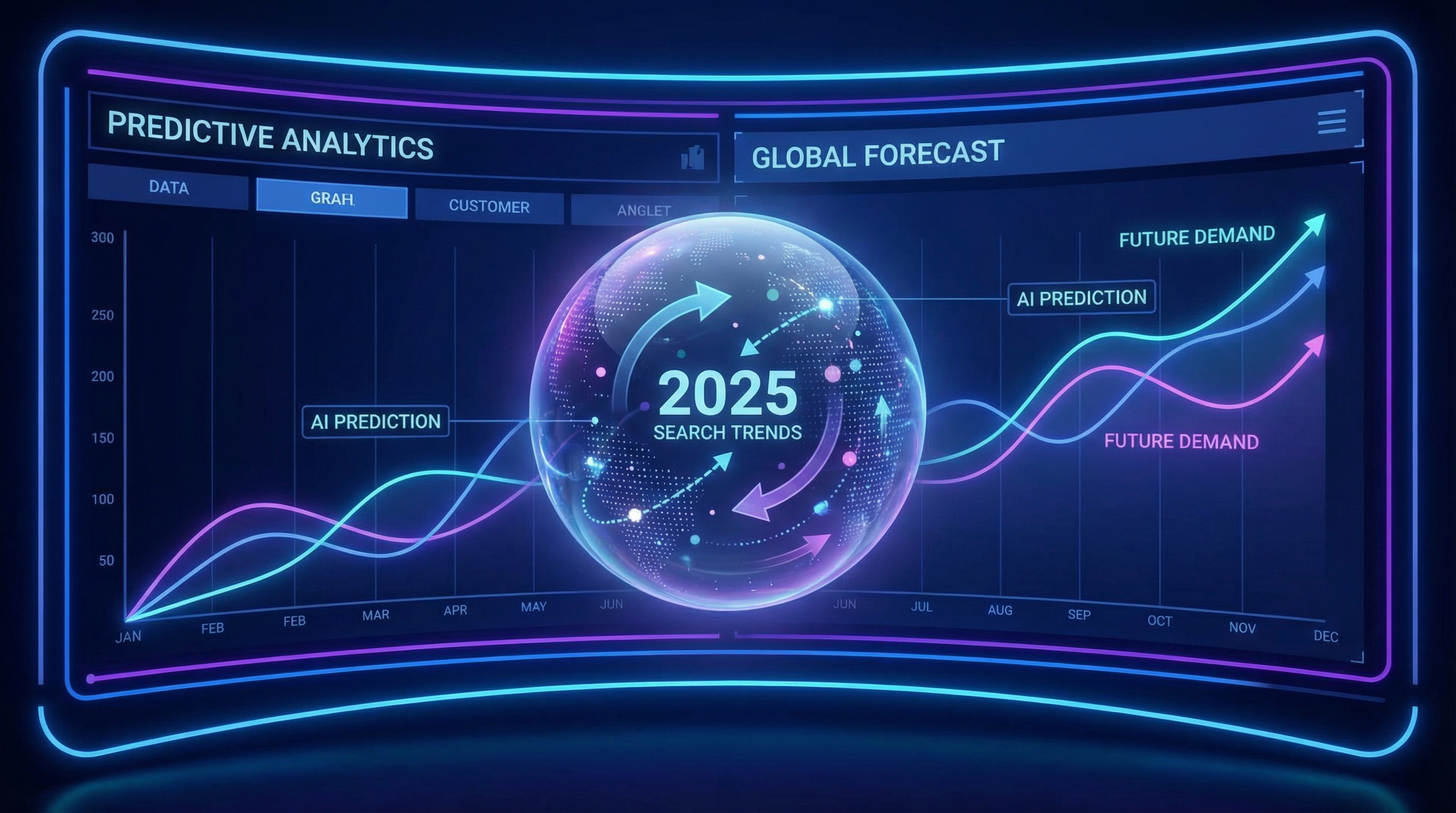
New AI tools analyze search patterns to predict trending topics 2-4 weeks before they peak. Sites using predictive SEO are capturing featured snippets for queries that don't even exist yet.
How it works:
- AI analyzes social media, news, and search patterns
- Identifies emerging topics in your niche
- Generates content briefs for predicted high-value keywords
- You publish before competition realizes the opportunity
Tools leading this: Clearscope AI, MarketMuse Predict, and SurferSEO's new Trend Prediction module.
5. Multimodal Search Optimization

Google Lens now processes 12 billion visual searches monthly. Users point cameras at products, problems, and places—and expect instant answers.
Multimodal SEO checklist:
- Image SEO 2.0: Descriptive filenames, comprehensive alt text, surrounding context
- Video transcripts: Every video needs accurate, keyword-rich transcripts
- Visual search markup: Product schema with high-quality images
- Audio optimization: Podcasts and audio content with full transcripts
6. E-E-A-T on Steroids
Experience, Expertise, Authoritativeness, Trustworthiness (E-E-A-T) isn't new—but AI search makes it critical. In 2026, AI evaluates:
| Factor | How AI Evaluates It | Your Action |
|---|---|---|
| Experience | First-person accounts, case studies, original research | Add personal stories and data |
| Expertise | Author credentials, citations, depth of coverage | Display author bios prominently |
| Authoritativeness | Backlinks, brand mentions, social signals | Build digital PR and partnerships |
| Trustworthiness | Reviews, transparency, security, accuracy | Add trust badges and citations |
7. Zero-Click Search Domination
68% of Google searches in 2026 end without a click. The traffic goes to sites featured in AI Overviews, featured snippets, and knowledge panels.
How to win zero-click searches:
- Featured snippet optimization: 40-60 word answers in bullet or numbered format
- Table snippets: Comparison tables for product/service queries
- Video snippets: YouTube videos with timestamps and transcripts
- People Also Ask: Create content answering related questions
The 2026 SEO Action Plan
Here's your 30-day roadmap to AI search dominance:
Week 1: Audit & Strategy
- Audit top 20 pages for LLM readability
- Implement comprehensive Schema markup
- Set up predictive SEO tools
Week 2: Content Optimization
- Rewrite content for voice search queries
- Add FAQ schema to 10 key pages
- Create comparison tables for featured snippets
Week 3: Multimodal SEO
- Optimize all images with descriptive alt text
- Transcribe all video content
- Add product schema with high-quality images
Week 4: Authority Building
- Publish original research or data study
- Reach out for 5 strategic backlinks
- Update author bios with credentials
The Bottom Line
SEO in 2026 isn't about gaming algorithms—it's about creating content so valuable that AI chooses to feature it. The sites winning are those that:
- Provide clear, factual, well-structured information
- Demonstrate real expertise and authority
- Optimize for how AI understands and presents content
- Move fast on emerging trends before competition
The good news? AI search actually rewards quality more than old SEO. No more keyword stuffing, link schemes, or technical tricks. Just genuinely helpful content, properly structured.
Start implementing these 7 trends today. By next month, you'll be ranking for queries your competitors haven't even discovered yet.
Want to Automate Your SEO?
Learn how AI agents can handle keyword research, content optimization, and technical SEO while you sleep.
Get the AI SEO Automation Guide →